
2026 Senior Fellows
The Moynihan Center Announces its 2026–2027 Senior Fellows
The Moynihan Center has named fifteen writers, scholars, and practitioners to its 2026–2027 cohort of Senior Fellows: twelve Public Scholars and three Distinguished Practitioners. The cohort comprises Sohrab Ahmari, Elmira Bayrasli, Victoria Diaz Garcia, Nicole Gelinas, Emily Greenhouse, Howard Husock, Nikhil Kumar, Zachariah Mampilly, Yadira Ramos-Herbert, Aaron Retica, Noah Rosenblum, Ian Rowe, Julie Sandorf, Alberto Spektorowski, and Bhaskar Sunkara. Their projects range from urban transit affordability to community development in the Bronx, from disability and public life to the future of major philanthropy, from gender and global security to the ideological challenges of liberal democracy. As Senior Fellows, they will engage in the weekly Moynihan Seminar at City College and join the Center's Society of Fellows.










Public Scholar
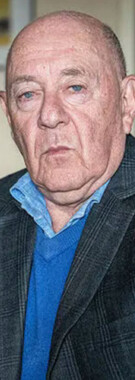
Sohrab Ahmari
US Editor, UnHerd
Sohrab Ahmari is the US Editor of UnHerd and cofounder of Compact magazine. He previously spent nearly a decade at News Corp, serving as an editor and columnist with the Wall Street Journal opinion pages in New York and London, and as the op-ed editor of the New York Post. In addition to those publications, his writing has appeared in The New York Times, The Washington Post, The New Statesman, The Spectator, The New Republic, Times Literary Supplement, Commonweal, and Dissent, among many others.
The Antinomies of the New Right
Ahmari is at work on an intellectual history that explores the key antinomies shaping the New Right: between Jacksonian populism and techno-capitalism, between Catholic universalism and barb-wired American nationalism, between bipartisan reform and brutal social-media warfare. Over the coming year, he will think through both the book's substance and its form, and will share with the seminar what he has learned about cross-partisan collaboration and its limits.

Public Scholar
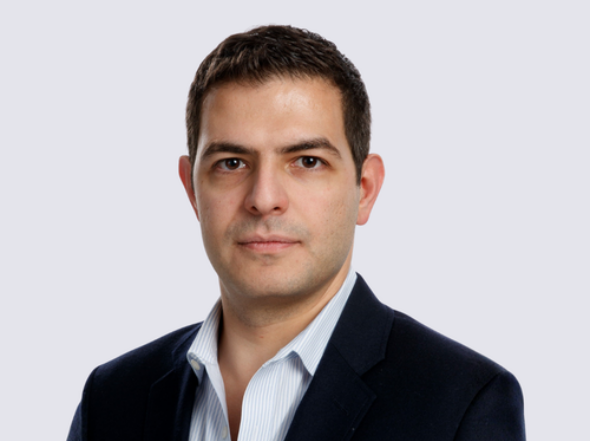
Elmira Bayrasli
CEO and Editor-in-Chief, Interruptrr
Elmira Bayrasli is an entrepreneur, writer, editor, and former U.S. diplomat whose work sits at the intersection of foreign policy, democratic governance, and global innovation. She is the CEO and editor-in-chief of Interruptrr, a weekly newsletter elevating female expertise in global affairs, and the author of From the Other Side of the World: Extraordinary Entrepreneurs, Unlikely Places.
Bayrasli served as a presidential appointee in the U.S. State Department from 1994 to 2000, working for Madeleine Albright and Richard Holbrooke, and later as Chief Spokesperson for the OSCE Mission in Sarajevo. Her analysis has appeared in Foreign Affairs, Reuters, The New York Times, and The Washington Post, and she has been featured on CNN, NPR, BBC, and Al Jazeera. She serves on the boards of Our Secure Future, Turkish Philanthropy Funds, and the Feminist Foreign Policy Collaborative.
Gender, Governance, and Global Security
Bayrasli is working on a study of the evolution of women’s roles in foreign policy and the emergence of feminist foreign policy at a moment when the liberal international order and its human rights architecture are under strain. Rather than treating feminist foreign policy as a branding exercise, she approaches it as an institutional response to systemic failure, surfacing blind spots in traditional approaches to security and power. Drawing on Interruptrr’s work and on conversations with policymakers and academics, she will present her applied case studies to the seminar.

Public Scholar
Victoria Diaz Garcia
Inter-Agency Coordination Specialist, UN Women
Victoria Diaz Garcia is an Inter-Agency Coordination Specialist at UN Women, where she has spent fifteen years shaping international norms on gender equality and translating them into institutional practice. Her work involves engaging governments, civil society, and UN entities on issues of governance and accountability, often in complex contexts, where she facilitates dialogue among policymakers from diverse ideological perspectives.
She holds a PhD in Politics and International Relations from Dublin City University, where her research focused on institutional effectiveness in advancing women's rights. Her career at UN Women has included assignments at headquarters in New York, regional offices in Latin America and Africa, country offices in Afghanistan and Nicaragua, and at a joint office serving Tunisia and Libya. She has also worked in public administration, at Amnesty International, and in the NGO sector, experience that enables her to analyze accountability from both institutional and community perspectives.
Gender Equality, Accountability, and Institutional Reform
Diaz Garcia’s research examines the shift from compliance-based gender equality mainstreaming toward transformative institutional accountability. She asks how accountability mechanisms can move beyond reporting requirements to produce measurable and legitimate improvements in women’s lived conditions, and she analyzes the democratic culture, cross-partisan cooperation, and institutional transparency that accountability requires if it is to generate public value rather than become an end in itself. At the seminar, she will present work-in-progress on how vertical, horizontal, and transnational accountability mechanisms can strengthen institutional legitimacy across ideological divides.

Public Scholar
Nicole Gelinas
Senior Fellow, Manhattan Institute
Nicole Gelinas is a senior fellow at the Manhattan Institute for Policy Research, where her work focuses on urban economics and infrastructure. She is a frequent writer at The New York Times, a contributing editor and quarterly writer at City Journal, and a former columnist for the New York Post. Her book Movement: New York's Long War to Take Back its Streets from the Car (Fordham, 2024) was a co-awardee of the 2025 Gotham Book Prize. Her research on New York City transit crime and on the deployment of speed and red-light cameras has informed ongoing legislative and policy debates.
The Global Transit Affordability Index
Gelinas is developing a global transit affordability index: a survey of transit systems comparable to New York City’s that compares fare structures against local income levels and poverty rates, and examines which cities offer transit subsidies and whom those subsidies target. The project aims to inform New York City and state policy on whether free transit, targeted subsidies, or a hybrid approach would most effectively reduce the cost of public transport.

Public Scholar
Emily Greenhouse
Editor, The New York Review of Books
Emily Greenhouse is the editor of the New York Review of Books, a magazine of politics, literature, art, and ideas founded in 1963. She is the first woman to be sole editor of the magazine, and when she was appointed was the youngest editor in its history. During her tenure, she has broadened the magazine's contributor base, bringing in more women writers, and writers of color, expanding across generations all while holding to the editorial standards and commitments of the Review's founders. Greenhouse has also built a paid internship program, now in its sixth year, that brings CUNY students into the magazine's editorial work, widening the entry door into publishing. Many have gone on to full-time jobs in the field. Previously, Greenhouse worked as an editorial assistant at Granta Magazine, The New York Review, and The New Yorker. Before returning to The New York Review, she worked as a politics reporter at Bloomberg and then as the managing editor at The New Yorker.
Building Bridges in the Public Sphere
Greenhouse joins the fellowship at a moment when academia and publishing are both under strain, and when new alliances among scholars, journalists, and editors need to be built in defense of genuine public debate. During her fellowship, she will consider what those alliances can look like and how they might be sustained, drawing on her work at the Review and on the broader editorial questions that animate it: how to platform serious and morally considered ideas, how to draw together views that are often in opposition, and how to offer scholars reliable pipelines to visibility beyond the academy.

Distinguished Practitioner
Howard Husock
Senior Fellow, American Enterprise Institute
Howard Husock is a senior fellow in domestic policy studies at the American Enterprise Institute, where his work focuses on municipal government, urban housing policy, civil society, and philanthropy. Before joining AEI, he was vice president for research and publications at the Manhattan Institute, director of the case studies program in public policy and management at Harvard's Kennedy School, and a member of the board of the Corporation for Public Broadcasting. He began his career as a journalist and Emmy-winning documentary filmmaker.
Husock is the author of The Projects: A New History of Public Housing (NYU, 2025), The Poor Side of Town: And Why We Need It (Encounter, 2021), Who Killed Civil Society? The Rise of Big Government and Decline of Bourgeois Norms (Encounter, 2019), and Philanthropy Under Fire (Encounter, 2013). He is a contributing editor at City Journal.
Foundations Under Fire
Husock is at work on a new book, tentatively titled Foundations Under Fire, that traces the history of populist unease and backlash against major philanthropic foundations from both the progressive left and the populist right. Drawing on his earlier work on civil society and on his career across journalism, academia, and think tanks, he aims to suggest reforms that could lead to a more stable relationship between major philanthropy and democratic governance.
Public Scholar
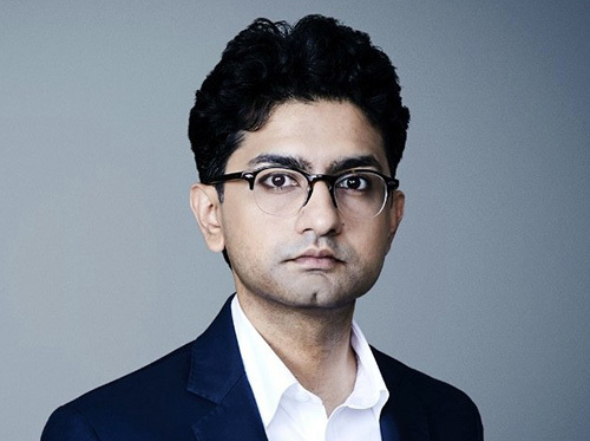
Nikhil Kumar
Executive Editor, TIME
Nikhil Kumar is Executive Editor at TIME, where he oversees coverage across climate, health, news, and ideas while contributing to the magazine’s global editorial strategy. He is an award-winning journalist with extensive experience reporting on major political, economic, and social events from around the world.
Kumar rejoined TIME in January 2025, after helping launch the Washington-based news analysis startup Grid and reporting across Asia for CNN. Earlier, he served as TIME’s Deputy International Editor in New York and as South Asia Bureau Chief. His reporting has covered the Eurozone debt crisis, the Rohingya refugee crisis, the war in Afghanistan, and the 2019 Easter Sunday terror attacks in Sri Lanka—work that earned him an Emmy nomination. His debut novel, The Architect's Dream, was published in 2024.
When Markets and Movements Merge
Kumar is at work on a new novel set in a dystopian future in which a nation is effectively captured by a corporate entity that fuses the pursuit of profit with the propagation of religious nationalism. During his fellowship, he will develop the book alongside his journalism at TIME, sharing both strands of work with the seminar.
Public Scholar
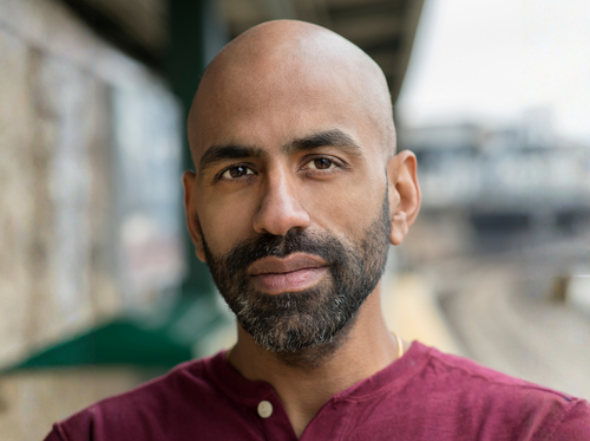
Zachariah Mampilly
Marxe Endowed Chair of International Affairs, Marxe School of Public and International Affairs, Baruch College
Zachariah Mampilly is the Marxe Endowed Chair of International Affairs at the Marxe School of Public and International Affairs, and a member of the doctoral faculty in the Department of Political Science at the Graduate Center, CUNY. He is cofounder of the Program on African Social Research.
He is the author of Rebel Rulers: Insurgent Governance and Civilian Life during War (Cornell, 2011) and, with Adam Branch, Africa Uprising: Popular Protest and Political Change (Zed, 2015). He is co-editor of Rebel Governance in Civil Wars (Cambridge, 2015) with Ana Arjona and Nelson Kasfir, and Peacemaking: From Practice to Theory (Praeger, 2011) with Andrea Bartoli and Susan Allen Nan. His writing has appeared in Foreign Affairs, Jacobin, The Hindu, Africa Is a Country, N+1, Dissent, Al Jazeera, The Washington Post, and The New York Times. He has held fellowships with the Institute for Advanced Study, the Open Society Foundations, the Harry Frank Guggenheim Foundation, the US Holocaust Memorial Museum, and the Fulbright Program.
The Revolutionary Imagination and Global Political Violence
A new round of violent politics—coups, assassination attempts, riots on the edge of outright war—dominates global headlines, even as scholarship on the underlying question of revolution has stalled. Drawing on two decades of field research with both violent and nonviolent actors, Mampilly is at work on a book that examines why revolutionary violence retains its hold on the political imagination, how its practitioners understand the relationship between violence and political change, and what the costs and consequences of that understanding have been. The project pays particular attention to violent actors from the Global South, whose role in shaping contemporary theories of political violence is understudied relative to their actual influence.

Public Scholar
Yadira Ramos-Herbert
Mayor, City of New Rochelle
Yadira Ramos-Herbert is the Mayor of New Rochelle, New York, a practicing attorney, and a former higher education administrator who works at the intersection of research, policy, and lived experience. As mayor, she leads a politically and culturally diverse city where effective governance depends on listening across differences and building coalitions around shared goals. Her work focuses on housing, economic opportunity, infrastructure, and climate resilience, guided by data and grounded in constant public engagement.
Before entering elected office, Ramos-Herbert served as Dean of Students at Columbia Law School, where she worked closely with faculty and institutional leadership on curriculum and governance. She continues to teach and mentor, and brings to her public role a commitment to civic education, transparency, and the willingness to engage across ideological lines, a commitment shaped by the daily practice of governing.
Cities, Policy, and Democratic Practice
As a sitting mayor, Ramos-Herbert examines how local governments translate national policy debates into lived civic experience, particularly on housing affordability, infrastructure investment, and climate adaptation. During her fellowship, she will present this work to the seminar as a practice-based inquiry, drawing on case examples from New Rochelle and peer cities and inviting discussion of the tensions between theory and implementation in local governance.
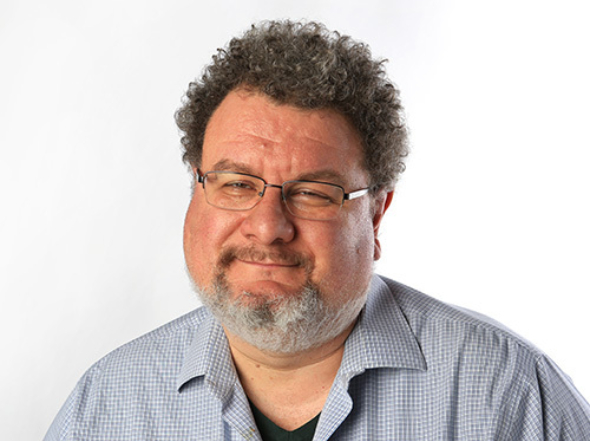
Public Scholar
Aaron Retica
Editor-at-Large, The New York Times
Aaron Retica is an editor at large in the Opinion section of The New York Times, where he works with columnists, contributing writers, and occasional guest essayists, with a particular focus on American politics and history. He also occasionally serves as an informal podcast host for The Times. Retica has spent more than 20 years at The Times, primarily within the opinion section, where he previously served as politics editor.
Before joining the paper, Retica spent a decade at The New Yorker, where he began his career as a fact-checker. His professional background also includes work on political campaigns, the development of library collections, and the investigation of organized crime for the Manhattan District Attorney’s Office.
Disability, Access, and Public Life
Having crossed the border from able-bodied to disabled in his mid-fifties, Retica will write on what the experience has shown him about American political life—from subway elevators to the current administration's posture toward disabled workers, from the vagaries of public transit to the widening gap between what we demand of the state in good health and what we need from it when we are not. Underlying the work is a conviction Retica frames directly—what we want from public life when we are disabled is what we should want for everyone.

Public Scholar
Noah Rosenblum
Associate Professor, NYU School of Law
Noah A. Rosenblum is an Associate Professor of Law at New York University School of Law and faculty director of the Vanderbilt Scholars Program and Katzmann Symposium. He is also a faculty affiliate of the Department of History.
Rosenblum works primarily in administrative law, constitutional law, and legal history. His research takes a historical approach to the study of state institutions, seeking to understand how law can be used to promote democratic accountability. He is currently pursuing several projects on the history of the place of the president in the administrative state.
His academic writing has appeared in the Harvard Law Review, Columbia Law Review, and Yale Law Journal, among other venues, and has been awarded the Joseph Parker Prize in Legal History and the Fred C. Zacharias Award in Legal Ethics, among other honors. Rosenblum is also a frequent commentator on public law and New York state courts.
Executive Power and the American Democratic Project
Rosenblum is at work on a scholarly book and several academic articles on the place of the president in the administrative state, examining how the current administration fits into the longer arc of changes in American government, and what reforms will be required to strengthen and stabilize American democracy. His work takes shape against what he describes as a generational reconsideration of the American democratic project, and draws on the conviction—shared with Arendt, Aron, and Baldwin—that rigorous scholarly work is no less valuable for being accessible.

Public Scholar
Ian Rowe
Senior Fellow, American Enterprise Institute. Cofounder, Vertex Partnership Academies
Ian Rowe is a senior fellow at the American Enterprise Institute, where he focuses on education and upward mobility, family formation, and adoption. Rowe is cofounder of Vertex Partnership Academies, a virtues-based International Baccalaureate public charter high school in the Bronx; chairman of the board of Spence-Chapin, a nonprofit adoption agency; and cofounder of the National Summer School Initiative.
In addition to serving ten years as CEO of Public Prep, Rowe held leadership positions at Teach for America, the Bill & Melinda Gates Foundation, the White House, and MTV, where he earned two Public Service Emmys. In Agency, Rowe argues that young people succeed when they embrace four core pillars of human flourishing: Family, Religion, Education, and Entrepreneurship (FREE).
Agency, Upward Mobility, and Youth Development
Rowe's work is animated by a question he has pursued across three decades of research and practice: why some young people in challenging circumstances develop a sense of personal agency, and others do not. At the American Enterprise Institute he studies the cultural and policy interventions that shape this divergence; at Vertex Partnership Academies, a Bronx charter high school he cofounded, he tests those ideas with students. During his fellowship, he will draw this work together, developing Coming of Age(ncy), a book that translates his research for the young readers he has spent his career serving.

Distinguished Practitioner
Julie Sandorf
Retired President, Charles H. Revson Foundation
From 2008 to 2025, Julie Sandorf served as president of the Charles H. Revson Foundation, where she led efforts to strengthen the civic life, health, and welfare of New Yorkers and citizens of Israel. Under her leadership, the foundation advanced major initiatives, including the revitalization of New York City's public libraries, the bolstering of local journalism, the creation of a multi-faith Center for Pastoral Care, the expansion of civic service and community development movements in Israel, and the support of pioneering fellowships in biomedical research.
Before Revson, Sandorf was co-founder and executive director of Nextbook, an organization devoted to Jewish literature and culture, and from 1991 to 1999 served as founding CEO of the Corporation for Supportive Housing, a national organization she founded to create permanent solutions to homelessness. Her career began in the South Bronx with the Mid-Bronx Desperadoes Community Development Corporation.
Civic Renewal and the Promise of the American Idea
Sandorf is at work on a biography of Genevieve Brooks Brown, founder of Mid-Bronx Desperadoes, the community development corporation that rebuilt a South Bronx neighborhood once declared a national symbol of urban decay. Drawing on Brown's life—from her family's history under enslavement and Jim Crow to the development of the Charlotte Gardens homes on a street two presidents had visited as a national disaster area—the book examines the values of faith, self-reliance, and mutual responsibility that animated her work, and what they offer to new generations of civic builders.

Distinguished Practitioner
Alberto Spektorowski
Retired Professor of Political Science, Tel Aviv University
Alberto Spektorowski is a political theorist and retired professor at Tel Aviv University, where his research has focused on fascist ideology, the European New Right, and the ideological challenges to liberal democracy. His most recent book, Intellectual Post-Fascism? The Conservative Revolution, Traditionalism and the Challenge to Liberal Democracy, was published by Cambridge in 2025. He has published widely in leading academic journals and has been a visiting scholar at Columbia and at universities across Latin America.
Beyond his academic work, Spektorowski served as a member of the International Contact Group that negotiated the end of violence between the Spanish state and the ETA insurgent movement in the Basque Country, and earlier as a member of the advisory team to Israeli Foreign Minister Shlomo Ben-Ami during the Israeli–Palestinian peace negotiations of 2000.
The Ideological Metamorphosis of Fascism
Spektorowski will examine how contemporary right-wing exclusionary postcolonialism and left-wing postcolonialism, despite their differences, converge in rejecting modern liberal society and seeking refuge in ethnonationalism. He argues that the synthesis of these currents is giving rise to what he calls a "fascism of resistance," a development that calls for a principled response from defenders of liberal democracy. At the seminar, he will present the project's core hypotheses alongside material from his most recent book.

Public Scholar
Bhaskar Sunkara
President, The Nation
Bhaskar Sunkara is the president of The Nation and the founding editor of Jacobin. He is also the publisher of Catalyst: A Journal of Theory and Strategy, and Bookforum, and his writing has appeared in The New York Times, The Washington Post, The Guardian, and Foreign Policy. He is the author of The Socialist Manifesto: The Case for Radical Politics in an Era of Extreme Inequality and has edited several other volumes.
Though he writes from a democratic socialist perspective, Sunkara has built his public work around engagement across political divides, sustaining ongoing dialogue with thinkers at Compact, Reason, and The Free Press. He serves on the board of the Center for Working-Class Politics and has contributed to several of its research surveys on class dealignment and working-class voting preferences.
The Working Class and the Future of American Democracy
Sunkara’s current research examines the political implications of class dealignment: why working-class participation has eroded, how certain rhetorical and strategic choices deepen this divide, and what kinds of appeals might help rebuild a broad social base for democratic politics. He is particularly concerned with the extent to which working-class Americans feel unwelcome in today’s political and cultural spaces. In the seminar, he will present this work not as an abstract political-science problem but as a central question for the future of American democracy.
Engaging Across Lines of Difference
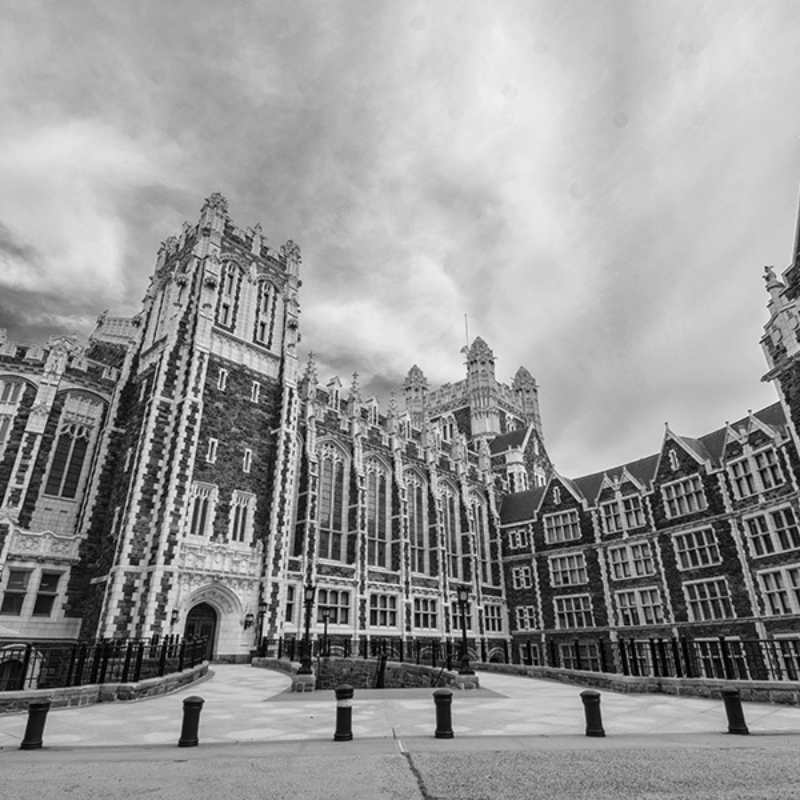
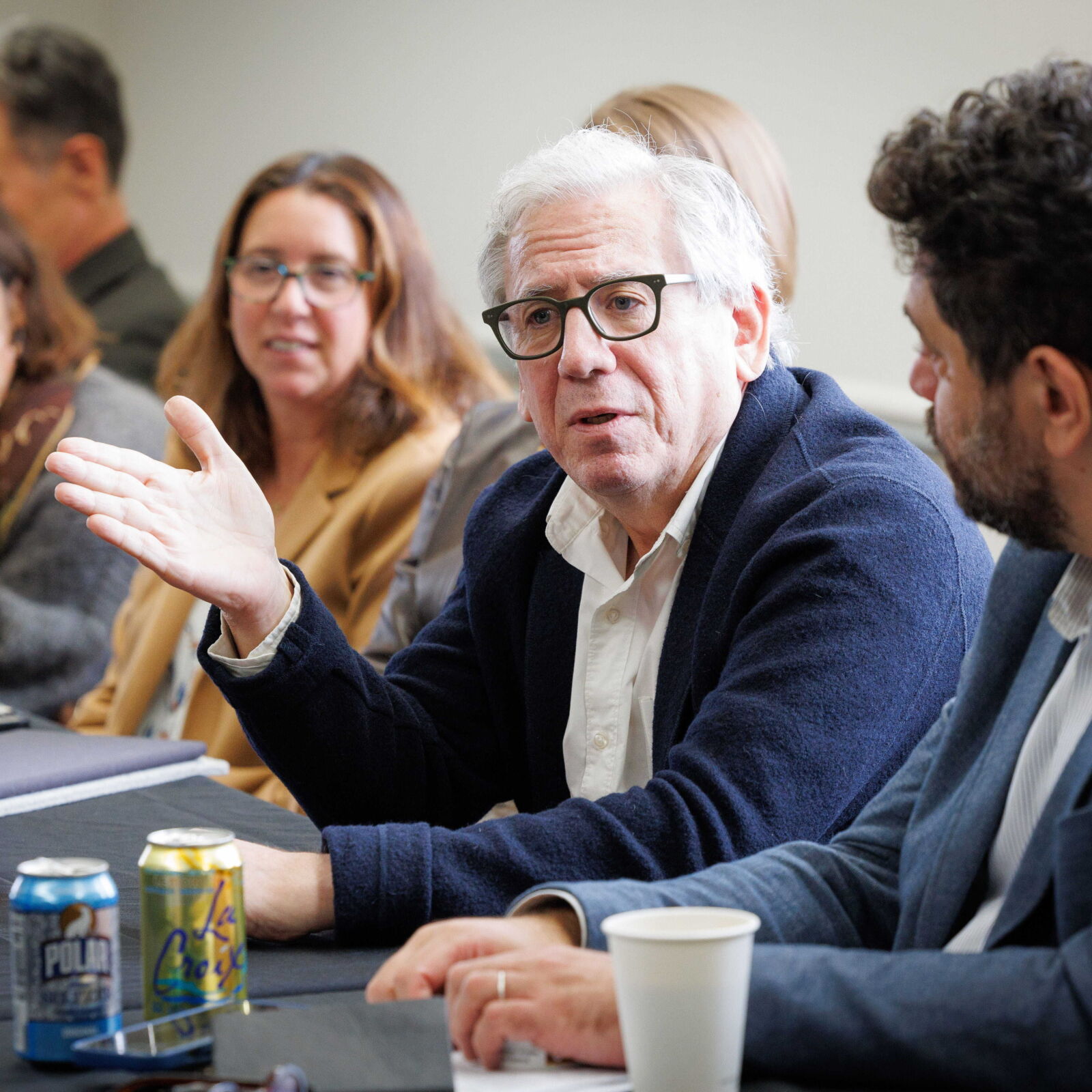
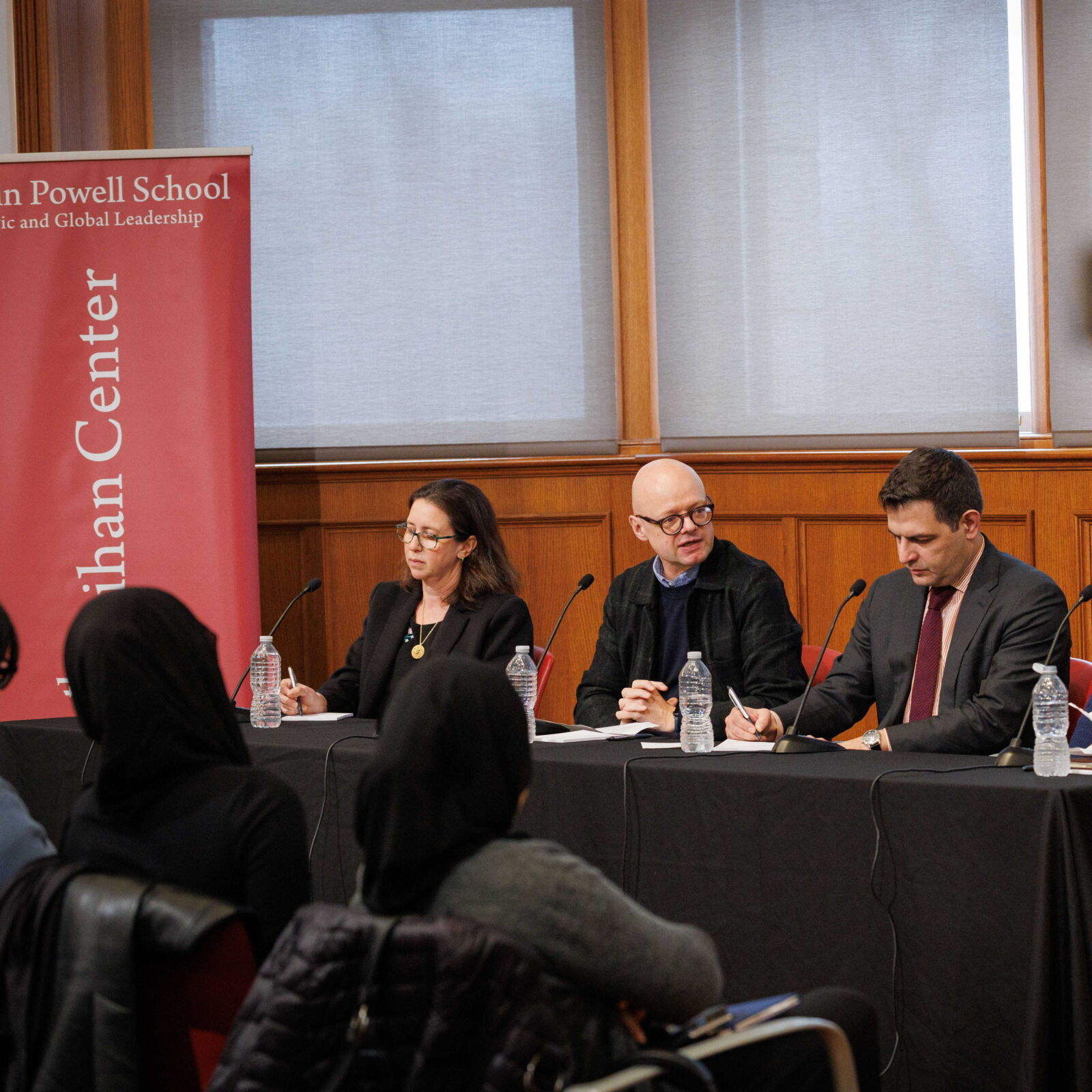
The 2026–2027 cohort brings together voices from across the ideological spectrum and from professional traditions including journalism, academia, public service, philanthropy, and public policy. What unites them is a shared commitment to constructive engagement across lines of difference: a willingness to test ideas seriously against others who see the world differently, and to do so in a setting that prizes intellectual rigor and open exchange in equal measure. The seminar room they will share at City College is one of the few places where these conversations happen in genuinely cross-cutting company.


At a moment when public discourse is increasingly polarized, the Moynihan Public Scholars Fellowship is a vital space for rigorous, open dialogue.
Yadira Ramos-Herbert

Valuable insights can be sidelined not because they are wrong, but because they come from the margins. Those experiences taught me that scholarship is not only about generating ideas, but ensuring that they move from the margins into the spaces where decisions are made.
Elmira Bayrasli

What attracts me most to this fellowship is the weekly discussion—the opportunity to hear a range of points of view and to help sharpen them.
Howard Husock
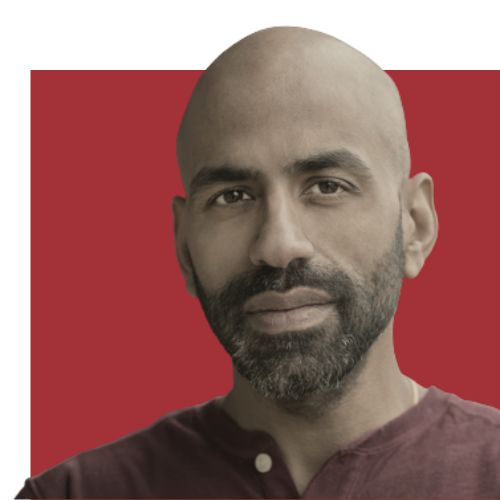
I have no desire to live in an echo chamber and believe that the political left, of which I am a part, has a unique responsibility to defend free speech and academic freedom.
Zachariah Mampilly
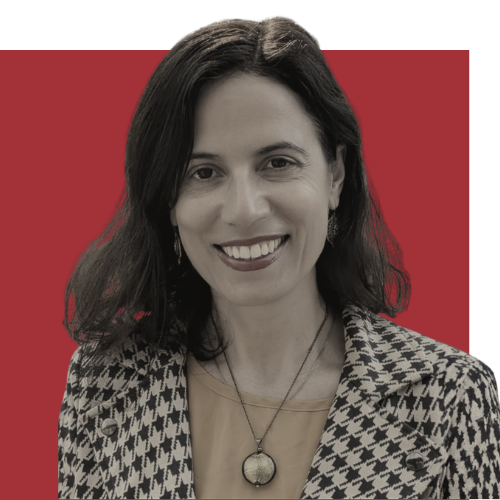
Public scholarship requires analytical clarity and institutional literacy: the ability to articulate contested concepts such as equality, accountability, and rights in ways that are evidence-informed, rigorous, and accessible across ideological divides.
Victoria Diaz Garcia
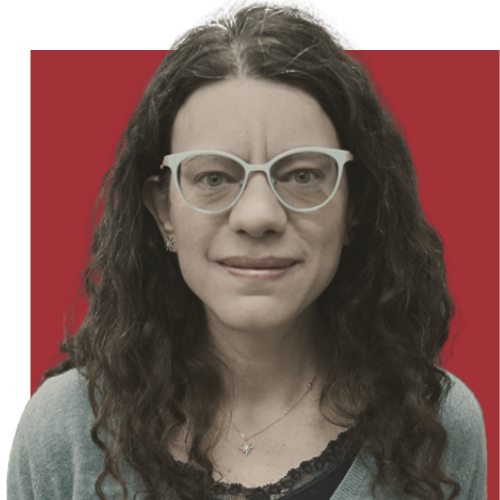
One stays current and learns new perspectives simply from listening to new voices and taking those voices seriously.
Nicole Gelinas

Substantive dialogue across cultural and ideological differences remains the only viable path toward achieving a minimum level of mutual understanding. But it must be grounded not only in mutual respect—it must also include a willingness not to suppress ideas, even in the presence of deep and often harsh disagreements.
Alberto Spektorowski

A functioning democratic society depends on spaces where disagreements can be productive, and where arguments begin not from moral certitude but from an effort to understand complexity.
Bhaskar Sunkara
Bridging Scholarship and Public Engagement
Senator Daniel Patrick Moynihan held that the work of democratic life depends on connecting “the world of ideas and the world of practical politics”—that scholarship, journalism, and public service are stronger when they speak to each other rather than past each other. The Moynihan Senior Fellowships extend that conviction into the present. Public Scholars are academic researchers, practitioners, and writers and journalists pursuing year-long projects that bridge scholarship and broad public engagement. Distinguished Practitioners are senior figures from public service, philanthropy, journalism, and academia who contribute to the Center's intellectual life and expand the professional networks available to Fellows and students.

Mentoring Tomorrow's Civic Leaders
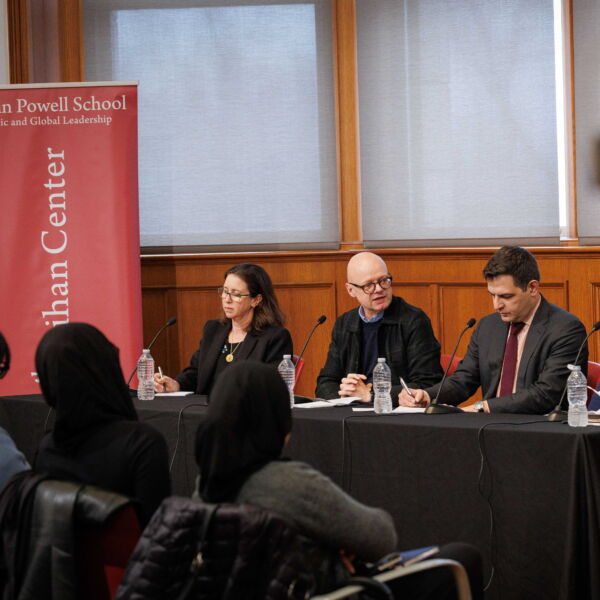
The Moynihan Center sits at the heart of the Colin Powell School for Civic and Global Leadership, where each year fifty CCNY undergraduates participate in the Moynihan Public Service Fellowship. Senior Fellows engage directly with these undergraduates—through formal presentations, informal seminar conversations, and dedicated mentorship—modeling what sustained engagement with ideas can look like over the course of a career. For undergraduate Fellows, many of whom are first-generation college students drawn from communities historically underrepresented in civic leadership, the chance to learn alongside Senior Fellows of this caliber is one of the program's most distinctive features.
