
News & Events
This CCNY Student Came in With a Plan. The Moynihan Fellowship Had Other Plans.
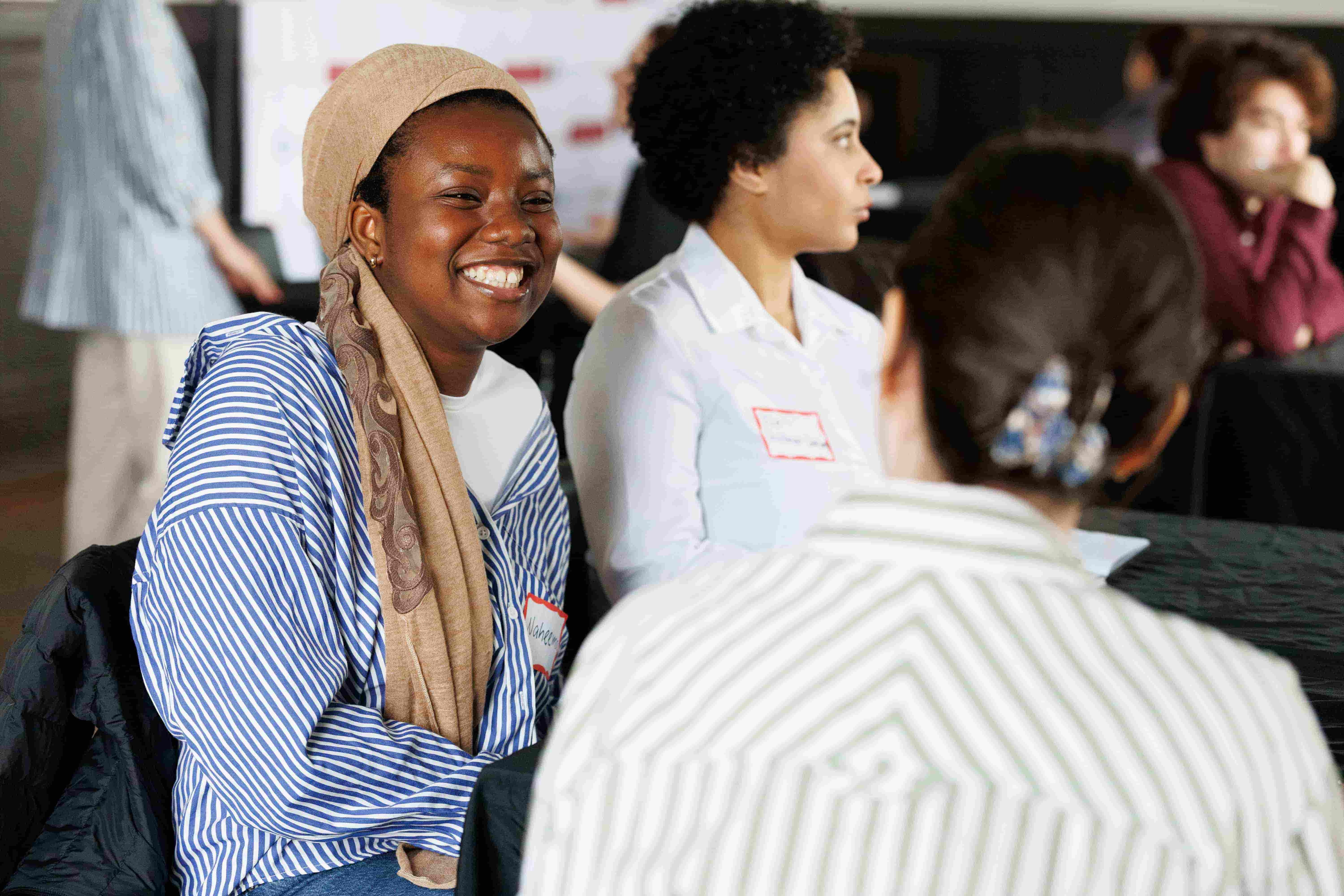
When Naheema Olatidoye applied to the Moynihan Fellowship at the City College of New York, she had a clear plan: become a lawyer, work in the District Attorney’s office, and change the world from inside a courtroom. Like Naheema herself, the plan was focused and purposeful—the kind of plan that takes shape when you know early on that you want your life’s work to create meaningful social change. What she did not anticipate was that a fellowship and a conference in Nairobi would lead her to see that her plan was merely one part of a much larger answer.
Naheema, now a rising junior double-majoring in political science and philosophy, with a minor in economics, came to the Moynihan Fellowship with a clear destination already in mind. “I knew I wanted to work in public service, and I really wanted to be a lawyer,” she says. The program felt like a natural fit for Naheema, offering resources and support to fellows as they prepare to pursue future careers in public service, just as Naheema has planned for herself.
What the fellowship unexpectedly gave her was exposure—to policy professionals, academics, journalists, and organizers, all working toward change through different means. She entered the program with the idea that she wanted to be one thing. The fellowship, however, kept introducing her to people who were many things at once. This was a foundational shift in Naheema’s way of thinking about her future.
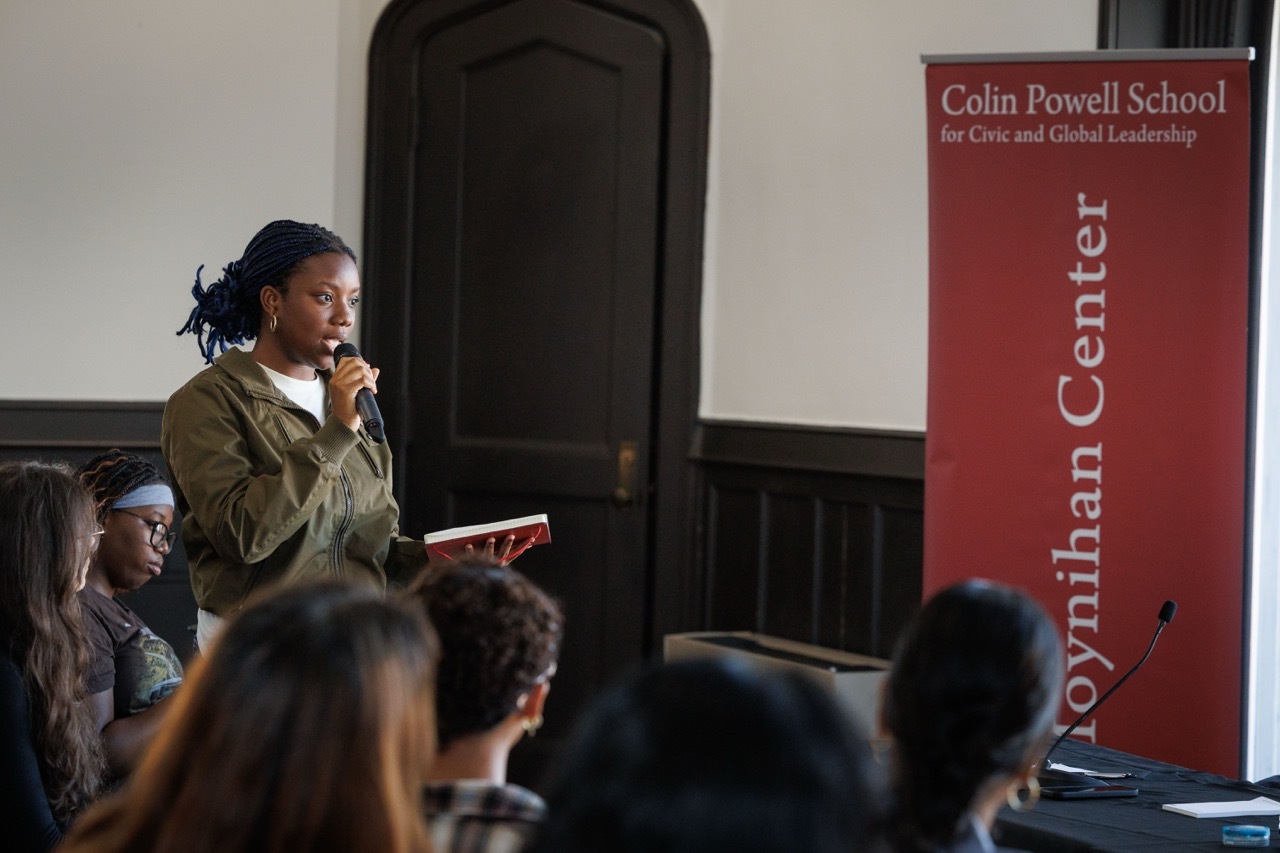
“I don’t want to just limit myself to being a lawyer anymore,” she says. “I’m super interested in academia, and I’ve been exposed to so many great academics through the Moynihan Center who use their graduate studies to make change.”
So, while law school is still very much in the picture, Naheema says, academia and journalism are now, too. What has shifted is not the destination—she remains firmly dedicated to creating meaningful social change—but her understanding of how many avenues there are through which she might pursue it.
From Big Ideas to the Nitty-Gritty: Lessons from Nairobi
That broadening of career interests happened, in part, through a mentorship connection that placed her in the middle of planning an international conference in Nairobi. The experience shifted her attention away from broad, abstract ideas toward the unglamorous logistical work required to turn those ideas into reality. For someone drawn to writing and ideas, it was an unexpected education.
“When you get into the nitty-gritty of these events that have such a drastic impact on the world, you don’t think of all the email chains that had to be set up for there to even be something like a table at the conference,” she says.
This experience showed her that vision without infrastructure is merely a wish. “You have to have a big picture and overall idea of what you want to do, but the actual logistics of how you get there—coordinating with a multitude of people from different organizations so that one purpose is achieved—that’s my biggest takeaway so far,” she adds.
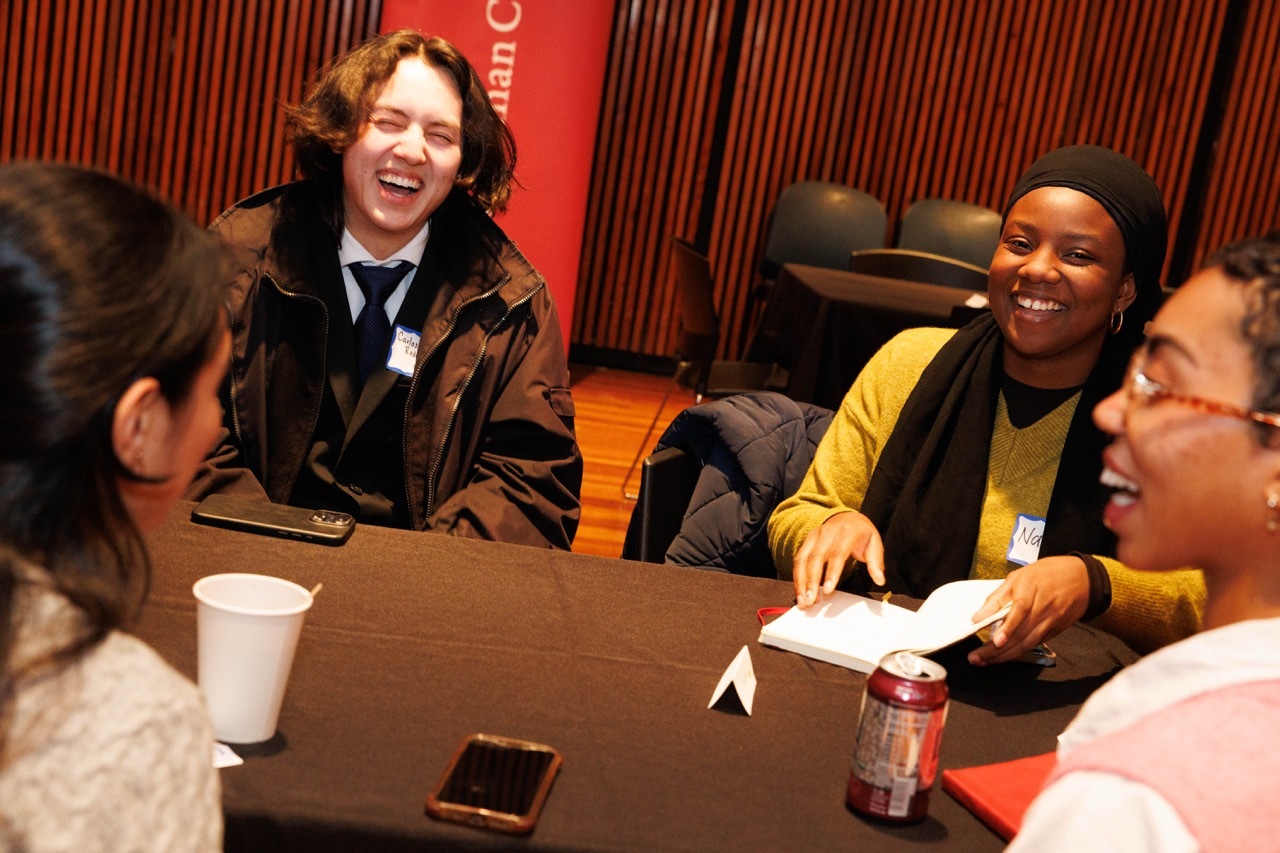
For Naheema, the thread connecting law, journalism, academia, and international conferences is education—specifically, resources and access to education. Growing up in New York, she has seen how the over-policing of Black and Brown communities can erode educational opportunities in these communities. Addressing the systemic over-policing of marginalized communities is what drives her, regardless of whatever form that work ultimately takes.
“I personally believe that education is one of the biggest ways to transform people’s lives,” she says.
She pushes back on the idea that transformation should be measured solely through the lens of social mobility. In her view, education is not simply a ladder. It’s a form of protection. “People are not just able to make more money when they’re educated—they are able to better advocate for themselves. An educated mind is harder to take advantage of.”
Naheema is heading into her next chapter with more questions than she started with, and she seems energized by that rather than unsettled. Her advice to students considering the fellowship mirrors the philosophy she’s been practicing herself: “Put yourself out there. People don’t know you until you let them know who you are.”
For a student who entered the fellowship with one answer, the Moynihan Fellowship has opened the door to many possible paths.